
Light Falloff For The Artist
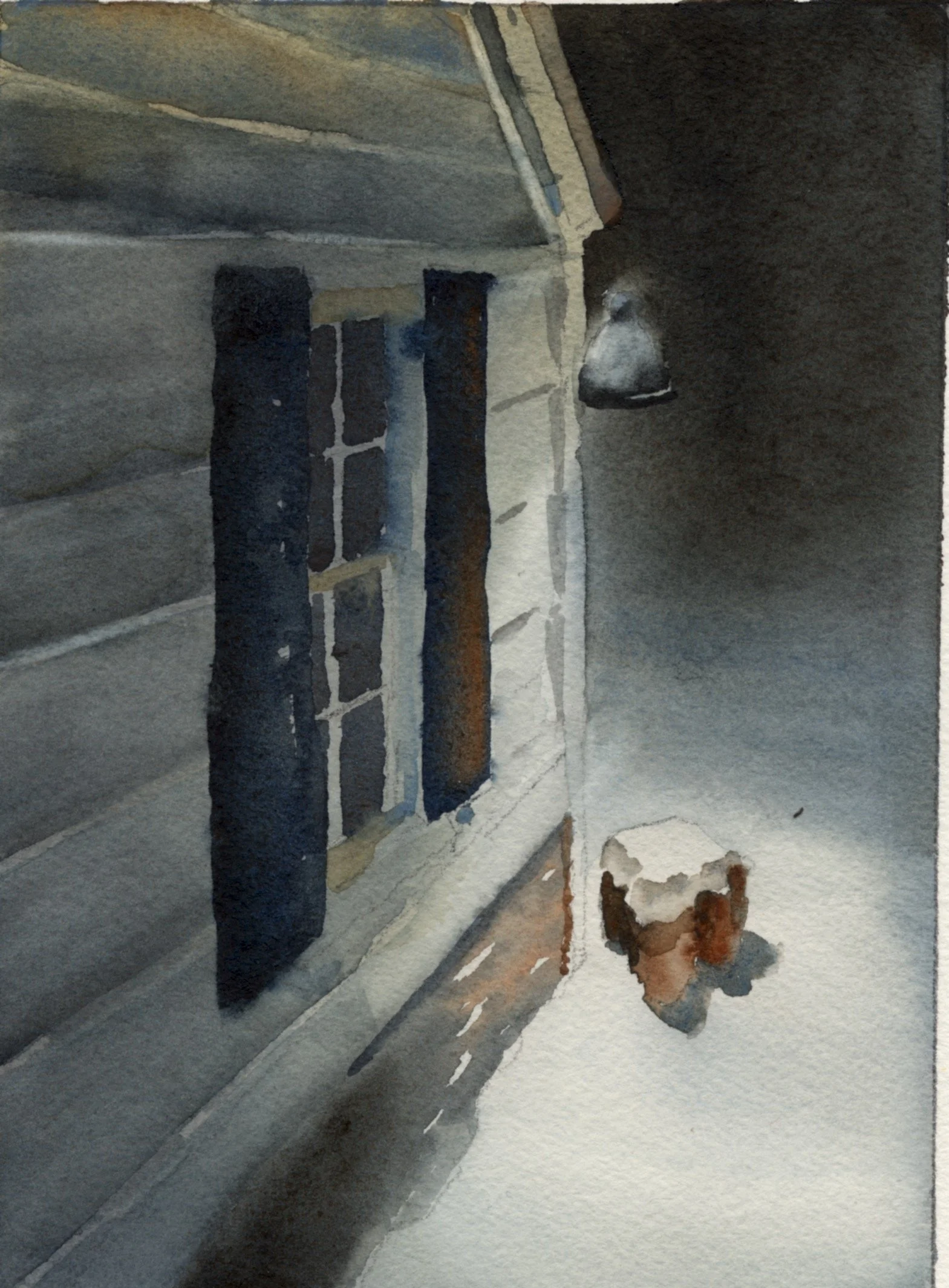
It’s obvious, and no surprising revelation, to state that a lamp that is across the room illuminates your book less well than lamp at your shoulder. The effect is what is known as “light falloff” and refers to the decrease in amount of light as it travels away from its source.
The decrease in illumination with distance is based in science and can be described mathematically by the Inverse Square Law, which states that the intensity of light diminishes with the square of the distance from the source.
Photographers and filmmakers need a good working knowledge of the effect of light falloff. Subject placement in relation to fixed lighting achieve many desired effects that affect mood and in directing visual attention.
Visual artists need only understand light falloff as a practical effect and how to obtain the effect in their paintings.
Gradation And The Graded Wash
The first thing to understand is that light falls off gradually, even if rapidly. In essence, there is a gradual change from brighter light to dimmer light and finally to shadow once light has fallen off completely.
The effect is best captured in paint using a the gradation technique - that is , creating a gradual change of hue or value, or sometimes both, from one part of a shape to another. The fluid nature of watercolor makes this a much easier task that in other media.
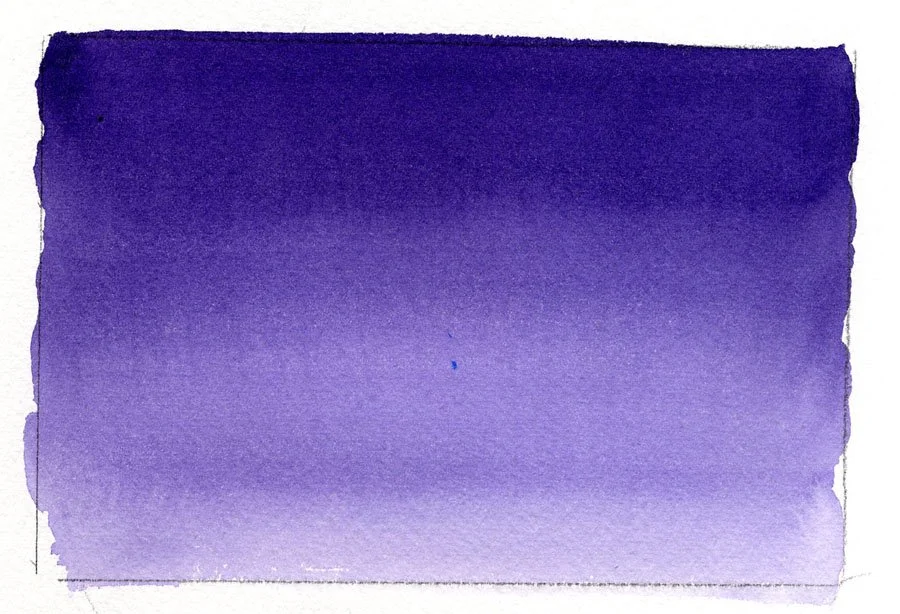
A Simple Graded Wash In Watercolor - the value of the color gradually changes from darker at the top to lighter at the bottom.
The picture above shows a simple graded wash painting with only a single color. Working from top to bottom, the wash has, relatively, more color and less water at the top and just the opposite by the time the wash reaches the bottom. Even in this simple wash, the possibilities for representing the decrease in light and gradual shift to shadow is easy to see.
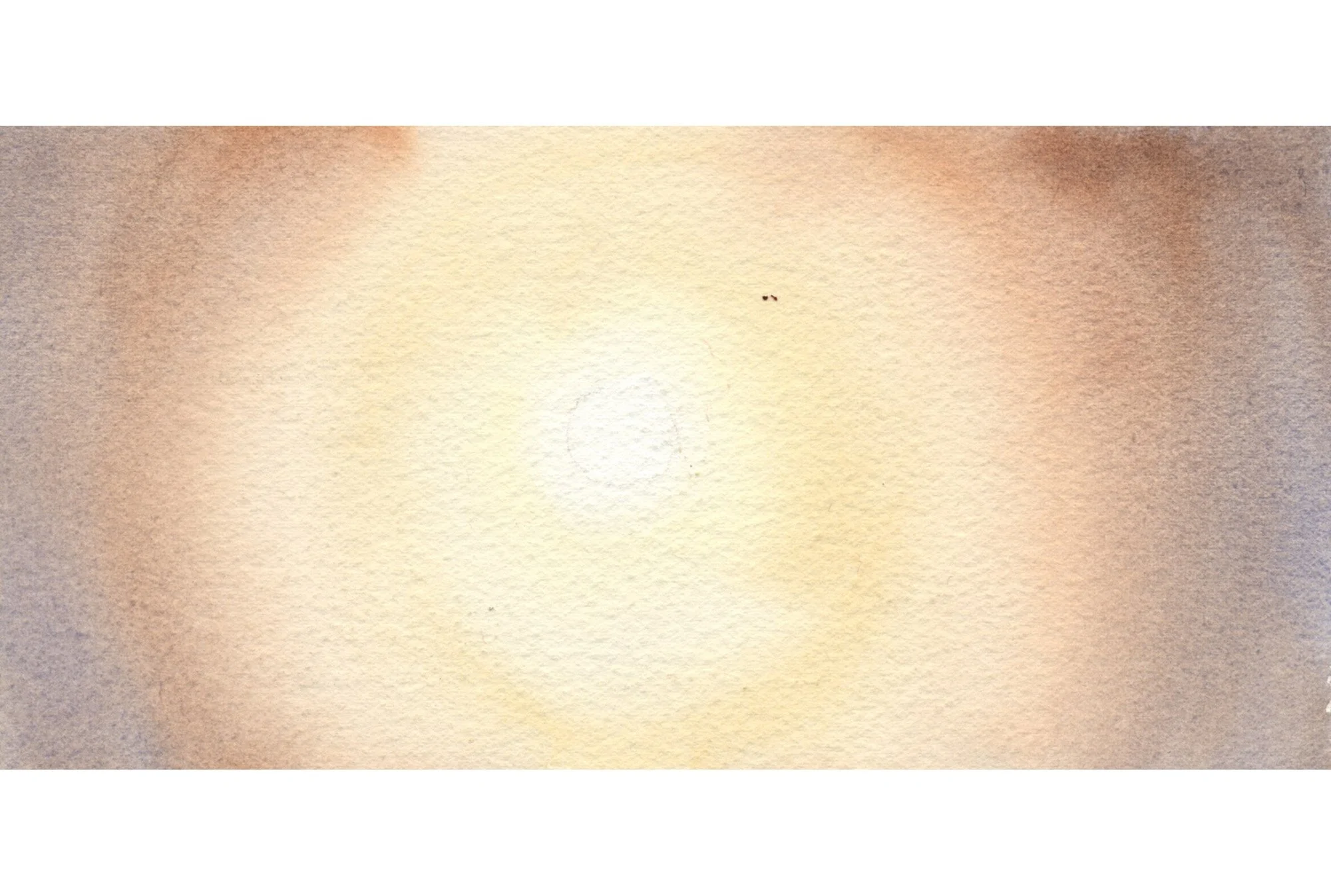
Gradation - using both gradation of color and value to represent light falloff
An even better representation of light falloff can be obtained with a wash graded for both hue from warm yellow-ish to cool gray-ish, and value from lighter to darker.
The short tutorial below shows how to create the effect of light falloff in a simple scene.
BTW - There is another tutorial on the basic graded wash in our free Watercolor Bootcamp course.
Watercolor Painting Tutorial - Technique For Painting Gradations And Light Falloff
You won’t find too many painting exercises easier than this one. But, it’s so useful. With certain changes and modifications, this method will represent interior light and it’s relatively rapid fall off.
The method uses a simple graded wash. The trickiest part is making sure you have a wet enough wash to ensure fluid mixing and gradual shift in value and temperature.
What You’ll Need
BRUSHES – A Single Medium Size Round
COLORS - Cobalt Blue, Burnt Sienna, Raw Sienna
RECOMMENDED PAPER – A piece of 140lb Cold Press Watercolor Paper about 6″ x 6″ or larger